
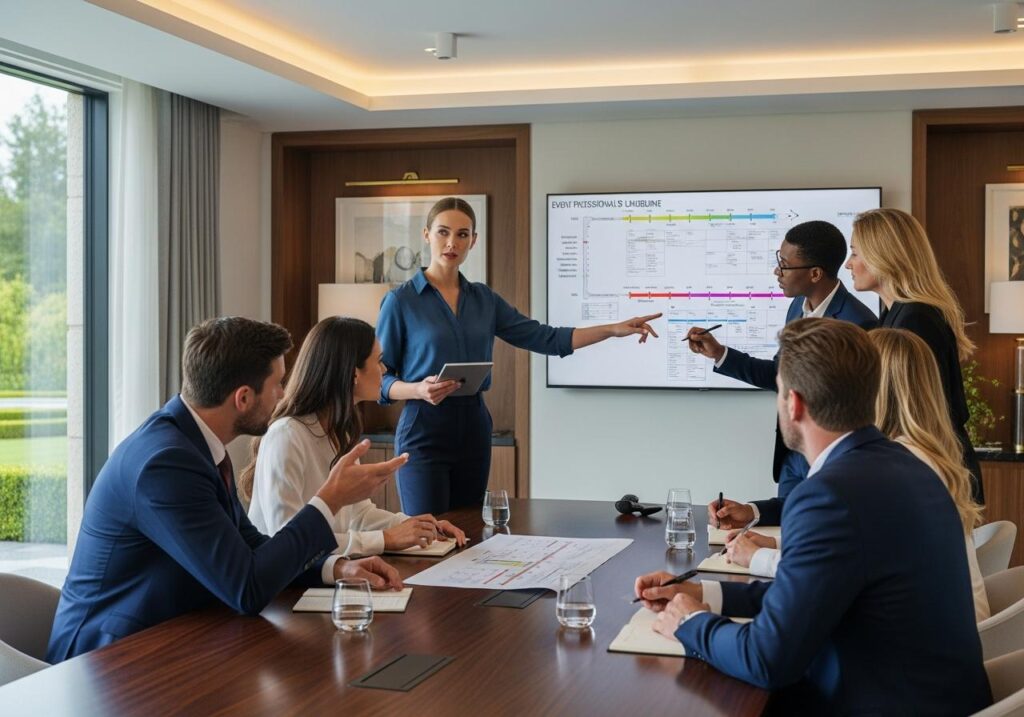
Organizing large-scale corporate events is a high-stakes discipline where success can boost employee engagement by 40% and generate vital B2B leads. Unlike small gatherings, these major productions require a rigorous process rather than luck to avoid brand damage.
This guide provides a professional blueprint for navigating South Africa’s complex event landscape. It ensures a seamless experience and measurable impact from the initial brief through to the final post-event analysis.
Phase 1: Establishing the Strategic Foundation
The success of any large-scale event depends on a solid strategic foundation rather than immediate venue booking. By defining a specific “why” and a structured financial plan, you ensure every subsequent decision aligns with your ultimate goals.
- Define Your “Why”: Establish clear, measurable objectives (e.g., “generate 200 qualified leads”) rather than vague aims like “increasing sales.”
- Build a Detailed Budget: Create a line-item spreadsheet including venue hire, catering, AV production, marketing, and a mandatory 10-15% contingency fund.
- Assemble an “A-Team”: Form a core planning committee with representatives from key departments (Marketing, HR, Finance) led by a single project lead to streamline decision-making.
Phase 2: Mastering Core Logistics and Execution
Once the strategy is set, the operational phase focuses on managing the complex moving parts that bring the event to life. Success in this stage requires meticulous site selection and invisible behind-the-scenes coordination to ensure a seamless attendee experience.
- Venue Selection: Conduct thorough site visits to verify capacity, breakaway rooms, and critical infrastructure like high-speed Wi-Fi and backup power solutions.
- Logistics Management: Develop a master production schedule to coordinate supplier arrivals, guest transport, and accommodation, while maintaining contingency plans for unforeseen delays.
- Technical Production: Tailor your AV setup to the event type, prioritizing atmospheric lighting and clear audio for galas, or multi-screen and streaming capabilities for conferences.
- High-Capacity Catering: Design a scalable menu that maintains quality across hundreds of servings, ensuring all dietary requirements (e.g., vegan, Halal, gluten-free) are confirmed and catered for well in advance.
Phase 3: Optimizing the Attendee Experience
The final phase shifts focus from operations to the guest journey, ensuring the event is engaging, memorable, and easy to navigate. By prioritizing clear communication and active participation, you transform a standard gathering into an impactful experience.
- Event Flow Management: Design a seamless journey with efficient registration, clear signage, and a schedule that allows for purposeful networking without rushing between sessions.
- Strategic Marketing: Execute a multi-channel campaign (email, social media, and direct outreach) to build momentum and keep attendees informed of key updates leading up to the event.
- Audience Engagement: Combat digital distraction by integrating interactive elements such as:
- Live polls and mobile Q&A sessions.
- Participatory workshops and breakout groups.
- A professional MC to sustain energy and manage the program’s tempo.
Phase 4: Final Execution and Performance Analysis
The final phase ensures the event concludes with professional precision and provides measurable data to prove its success. Focus on maintaining control during the “live” window and conducting a rigorous evaluation once the doors close.
- On-Site Execution: In the final days, conduct walkthroughs, hold team briefings, and ensure all physical documentation is ready for go-time.
- Post-Event Feedback: Immediately after the doors close, distribute surveys to capture fresh data from your attendees.
- ROI and Reporting: Finally, compile a report comparing your results against your Phase 1 goals to prove the event’s value to stakeholders.
Your Partner in Planning: Why Your Venue Choice is Foundational
Successful large-scale events require managing countless interconnected details, with venue selection being your most critical decision. The right location dictates the quality of everything from catering and logistics to the overall guest experience.
Partnering with an all-in-one venue like Eureka Estate simplifies this complexity through dedicated coordinators and established supplier networks. This support allows you to move beyond logistical firefighting and focus entirely on delivering a memorable, high-impact event.
Ready to Transform Your Next Corporate Event?
The difference between a standard gathering and an impactful corporate milestone lies in the details. Secure a venue that acts as your strategic partner, offering the infrastructure and expertise needed to bring your professional vision to life.
Contact Eureka Estate today to book a site visit and discover how our all-in-one service can streamline your planning process. Let’s collaborate to create a seamless, high-capacity experience that exceeds your stakeholders’ expectations.
FAQs
How far in advance should I plan a large corporate event?
For an event with over 200 attendees, I recommend a planning lead time of 9-12 months. This allows you to secure your preferred venue and top-tier speakers, who are often booked up a year in advance. For events with more than 300 people, a 12-18 month timeline is safer.
What is the biggest hidden cost in corporate event planning?
Technology and production are often the most underestimated costs. Elements like professional lighting, multi-camera setups for streaming, and dedicated technical crews can add a significant amount to your budget. Always request a detailed, itemised quote from your AV supplier early in the process.
How do I manage dietary requirements for hundreds of guests?
The key is a systematic process. Ask for dietary information on your registration form and make the field mandatory. Provide this data to your caterer at least two weeks before the event. On the day, use a system like colour-coded name badges or specially marked place cards to ensure the waitstaff can easily identify guests with specific needs.
What is the role of an event management company vs. a venue coordinator?
A venue coordinator is an expert on the venue itself; they manage all in-house services like catering, security, and facilities. An external event management company handles the entire project, including elements outside the venue like marketing, delegate registration, and speaker management. For some events, using both can be a powerful combination.
How can I make my corporate event more sustainable in South Africa?
Focus on reducing waste. Opt for digital programmes instead of printed ones. Work with your venue to implement a recycling programme for the event. Choose caterers who source local, seasonal produce. Consider donating leftover food to local charities like FoodForward SA. Small changes, when applied to a large event, can have a significant positive impact.